

A stack looks planned when it follows one rule: the pieces get smaller as they climb the ear. Most people get there by buying single pairs over a year and hoping they match. A set gets you there in one box, because it holds the same design in the sizes a stack needs.
Here is how to read a set for that job, hole by hole, from the lobe up.
Count your holes first
Stand at a mirror and count. The first lobe hole, the second and third above it, anything on the rim, the helix, and anything on the small flap by the ear canal, the tragus. Each one is a slot in the stack, and each slot has a different job.
Then check the gauge of what you wear in each. Lobes are usually 20G; a helix pierced in a studio may be 18G or 16G. A set is cut in one gauge, so it can only fill the holes that match.
The first hole takes the largest piece
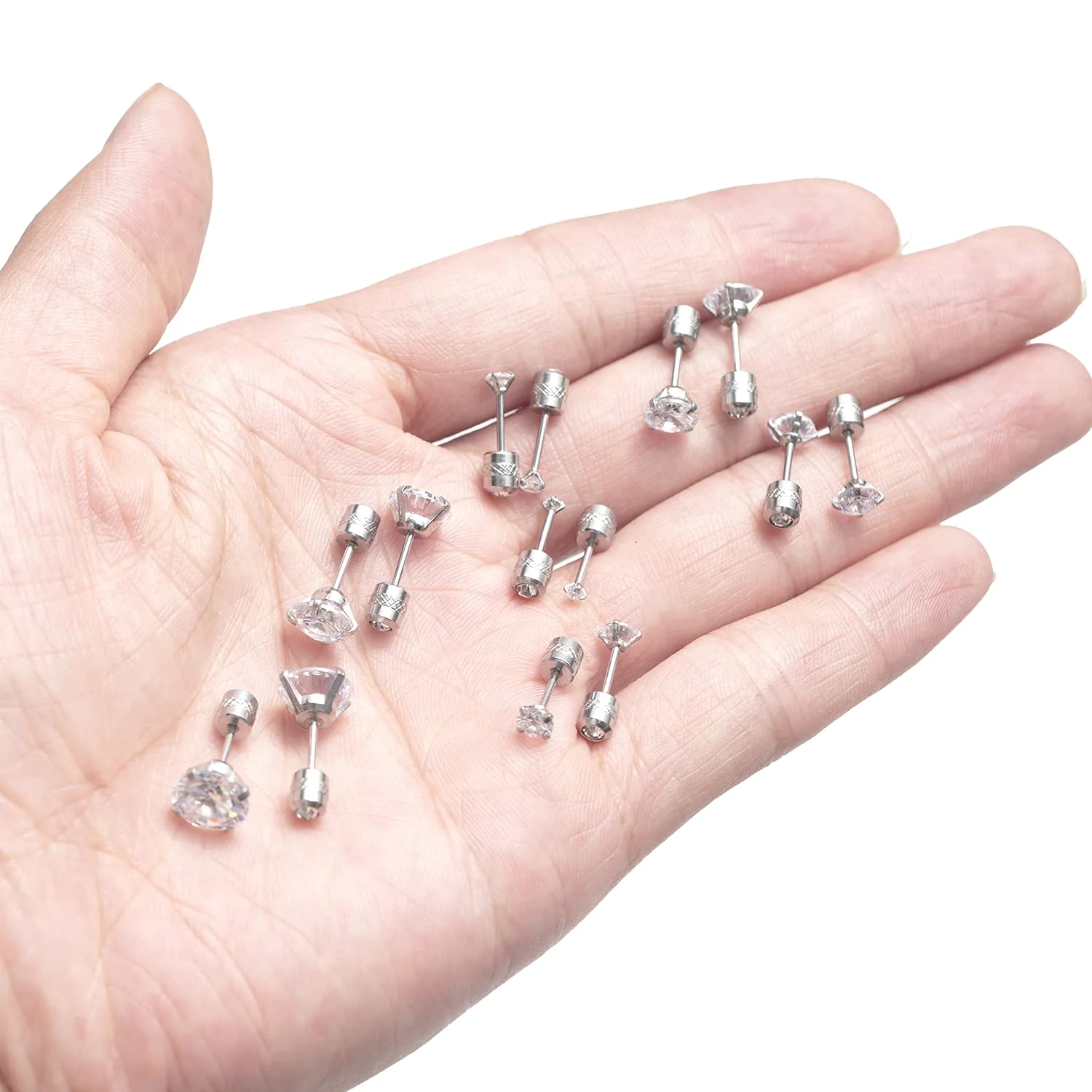
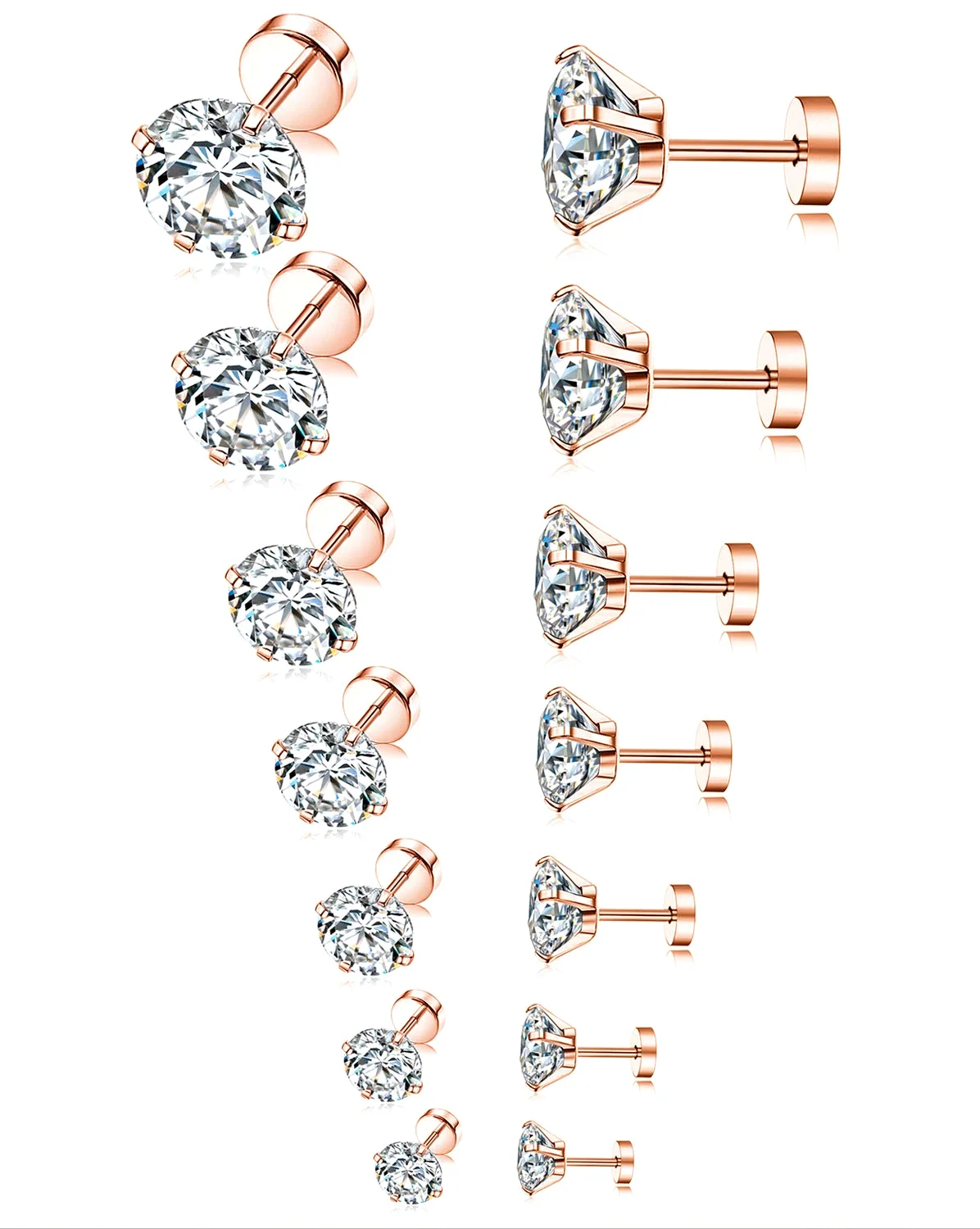
The first lobe hole sits lowest and has the most room around it, so it carries the statement: the biggest stone, the widest huggie or a drop. In a graduated set that is the top size, a 5mm or 6mm stone, or an 8mm huggie.
Step down one size per hole
The second hole takes the next size down, the third the one below that. The steps do the work: a 5mm, then a 4mm, then a 3mm stone reads as one design climbing the ear, even though they are three separate studs.
Hoops follow the same rule. A 6mm huggie above an 8mm one sits snug where the lobe thins out; reversing them makes the upper hoop stand away from the ear.
| Hole | Stud top | Huggie | Back |
|---|---|---|---|
| First lobe | 5mm to 6mm | 8mm to 10mm | Butterfly or screw |
| Second lobe | 4mm | 6mm to 8mm | Butterfly or flat |
| Third lobe | 2mm to 3mm | 6mm | Flat back |
| Helix | 2mm to 3mm | Small clicker | Flat back |
| Tragus | 2mm | Small clicker | Flat back, short bar |
Switch to flat backs as you climb
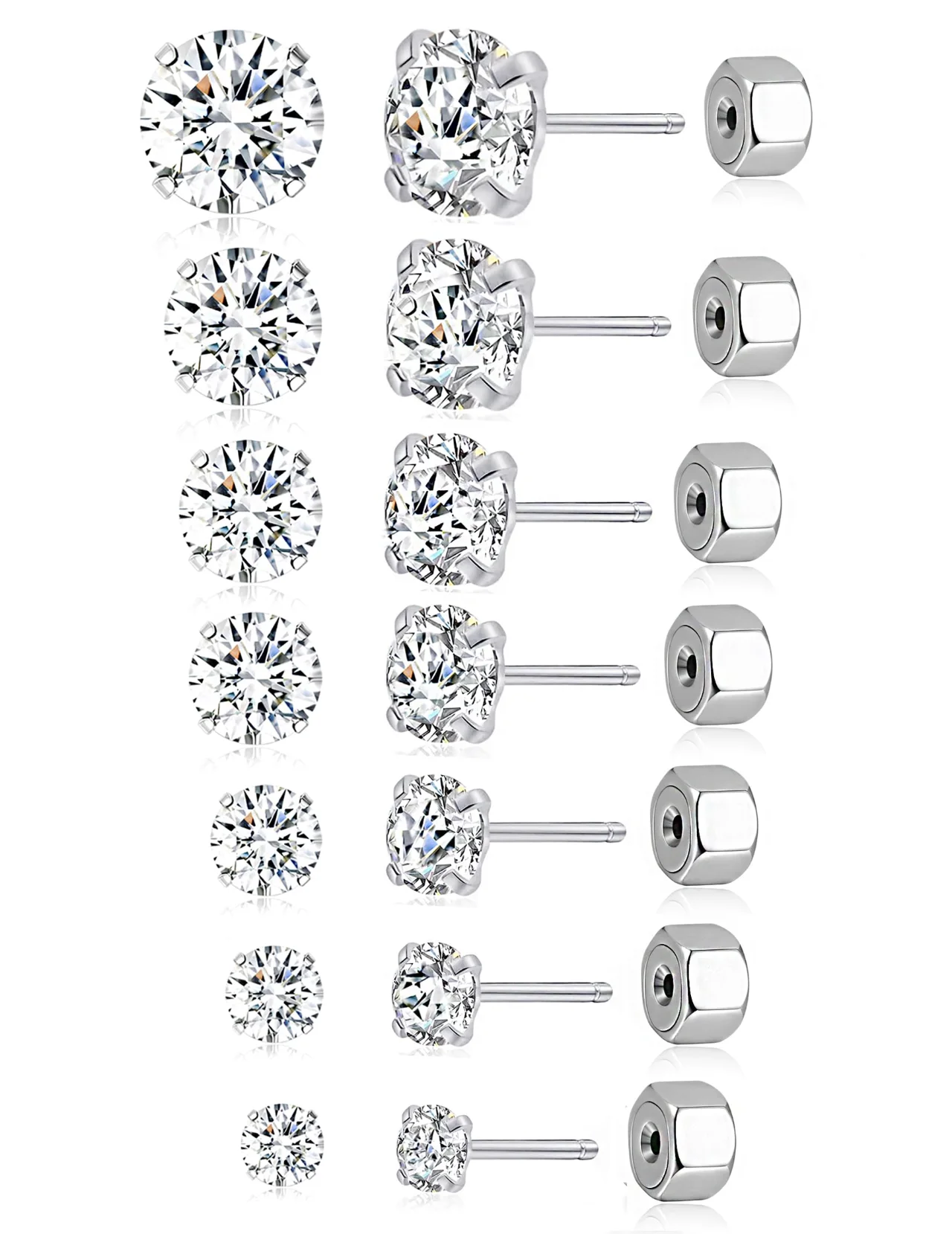
The higher the hole, the closer it sits to the cartilage and the more a butterfly back pokes when you lie on it. That is why a stack usually starts with butterfly or screw backs on the lobe and ends with flat backs on the helix and tragus. Several of our stud sets come with both, and the backs are named on every card.
On cartilage the bar length matters as much as the gauge. A 6mm bar suits a thin helix; 8mm leaves room for a thicker tragus.
Mix finish, not design
A stack can mix gold and silver and still hold together, as long as the shapes repeat: round stones in three sizes, or the same huggie in two. What breaks a stack is five different designs in five holes. Keep the design and play with the tone if you want contrast.
What a set will not do
A set does not dress a new piercing. A fresh hole keeps the jewelry your piercer chose until they say it can change; for a lobe the American Academy of Dermatology advises at least six weeks, and cartilage takes longer. Build the stack in holes that have healed, and if one of them turns sore or red, take the piece out of that hole and have it looked at.