

Put three nose studs on a table with the same gem on top and they look identical. Turn them over and they are three different tools. The part behind the gem, the bit that sits inside your nostril, decides how easy a stud is to put in, how well it stays, and how likely you are to find it in the sink one morning.
Most of our nose studs come in packs where the shape is part of the choice, and several packs carry all three, so you can find out which one your nose keeps without buying three boxes. This is what you are choosing between.
The L-shape: easy in, good enough for most
An L-shaped stud is a straight post with one right-angle bend near the end. You push the straight part through, turn the stud a quarter and the short leg sits along the inside of the nostril, holding it there.
It is the shape most people start with once a nostril has healed, because it goes in and comes out without a mirror and a steady hand. It holds well for most noses. If yours is on the thin side, or you have a habit of rubbing it, the short leg can work its way back out.
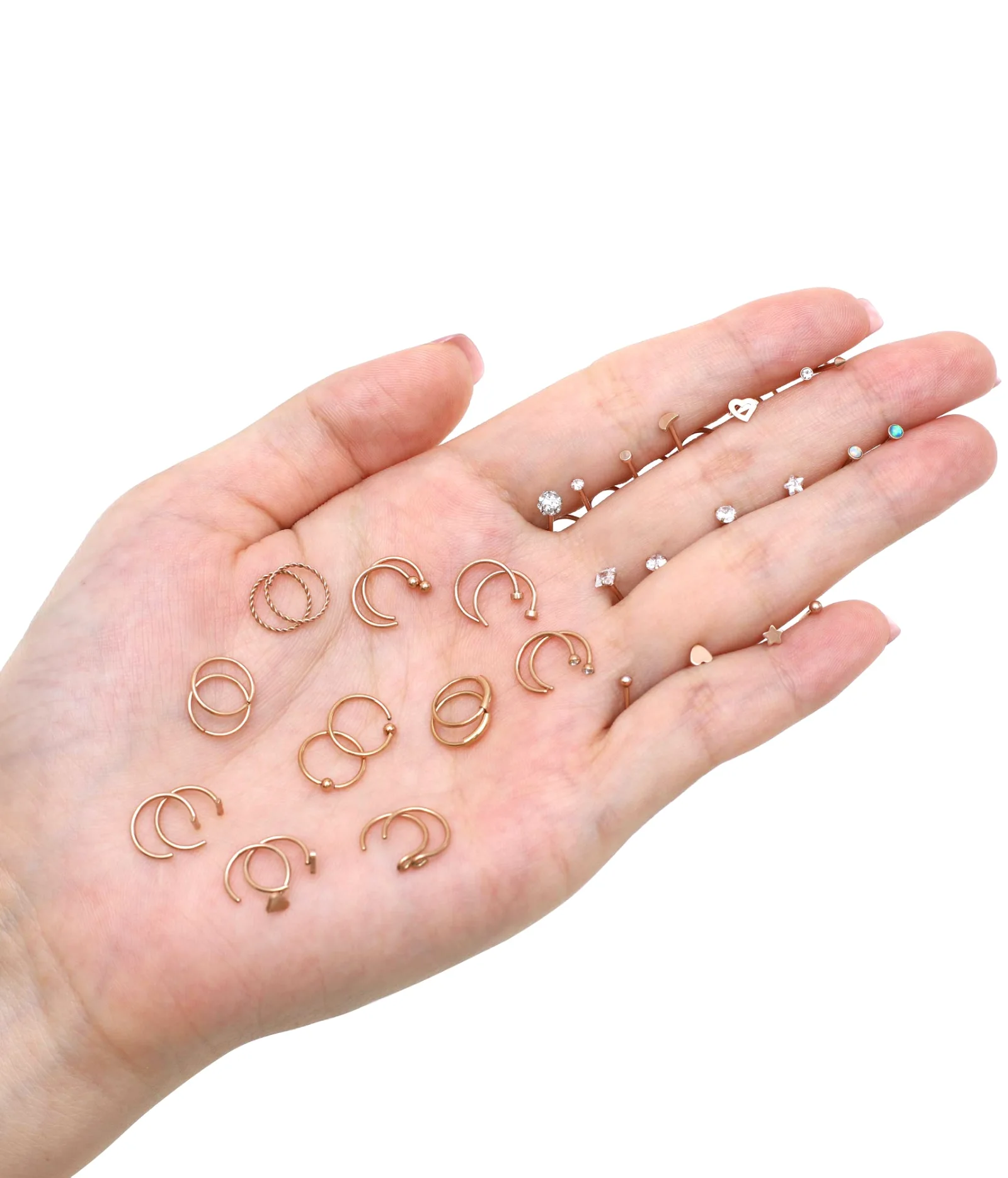
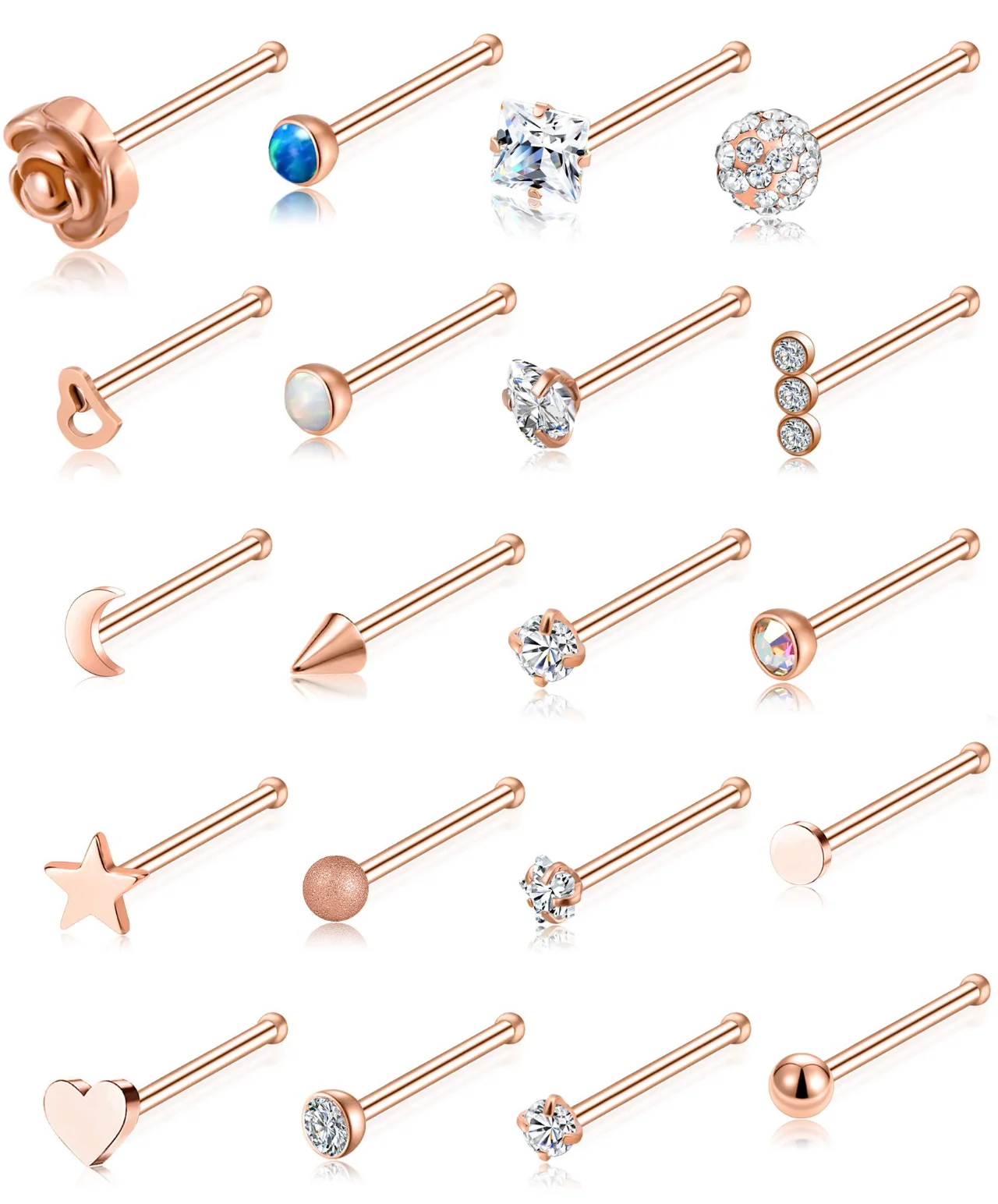
The screw: the one that stays
A screw, or corkscrew, stud curls into a spiral behind the nostril. You twist it in along the curve, and the spiral sits against the inside of the nose like a small hook.
It is the shape that stays in best, so it suits you if an L-shape has already slipped out once or twice. The trade-off is the fit: it takes a few tries to twist in, and a little patience to twist out.
The bone: easiest to change, easiest to lose
A bone stud is a straight post with a small ball on the end, a little wider than the hole. You press it through and the ball holds it on the inside.
Nothing is quicker to change, which suits a nose that wears a different stud every day. The same small ball is also the only thing holding it, so it is the shape that most often comes out with a sweater or a towel.
| Shape | Putting it in | How it holds | Suits |
|---|---|---|---|
| L-shaped | Push straight, turn a quarter | Well, for most noses | Everyday wear |
| Screw | Twist along the spiral | Best of the three | A stud you never want to lose |
| Bone | Press through the ball | Least of the three | Changing it often |
Gauge and length
Most nostril piercings settle at 20G, 0.8mm, and nearly all of our nose studs are 20G. A few are 18G or 16G, and the gauge is printed on each pack. If your stud slides in easily and sits snug, you have matched it; if you have to push, stop and check the number.
The post inside the nostril is short, around a quarter of an inch. A stud that is too long pokes the inside of the nose; one that is too short presses the gem into the skin.
Hoops, if a stud is not for you
A hoop frames the nostril instead of sitting flat on it. An 8mm hoop hugs the side of the nose, and the charm hoops hang a little lower. Hoops close on a hinged segment or a small captive bead, so there is no shape to choose and nothing to twist.
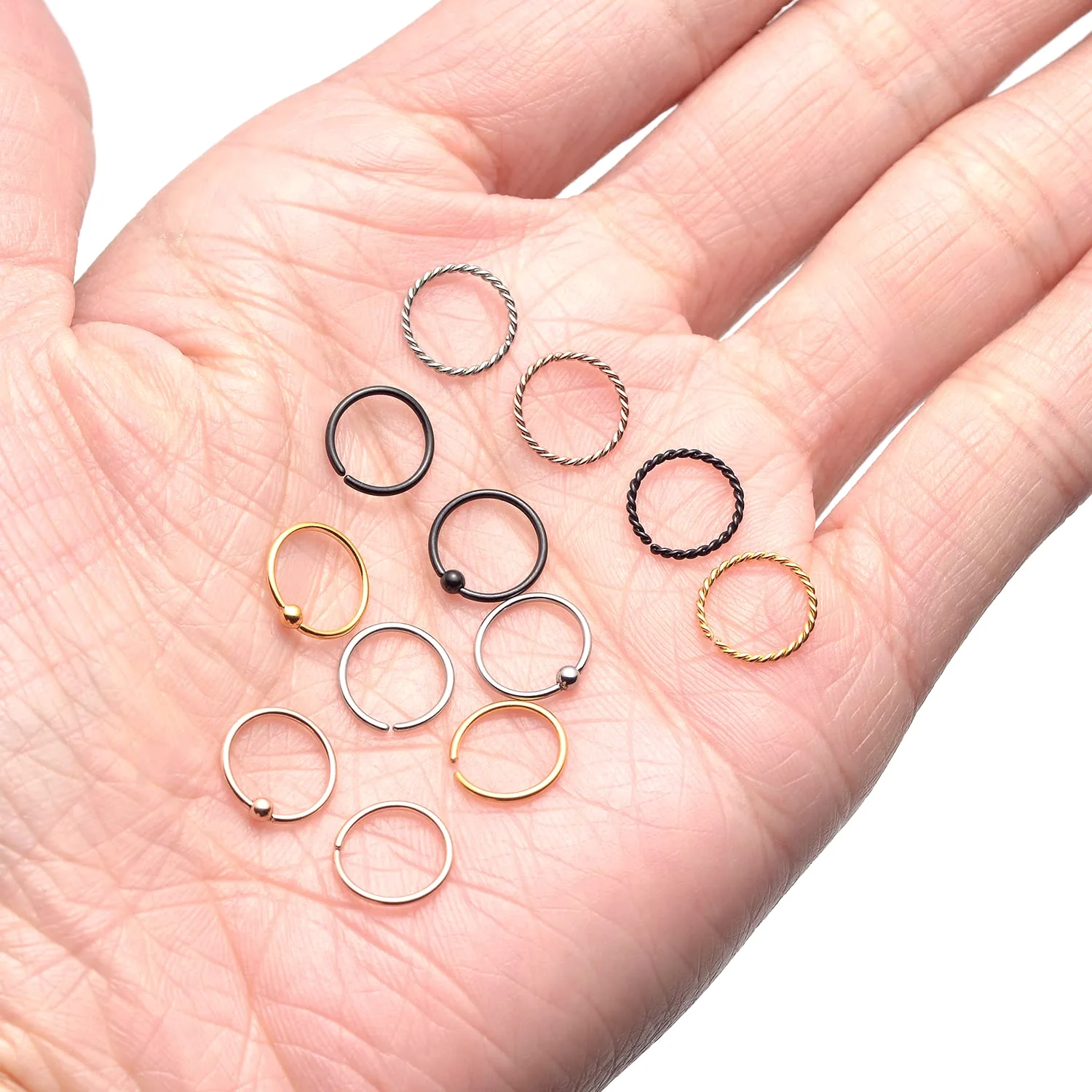
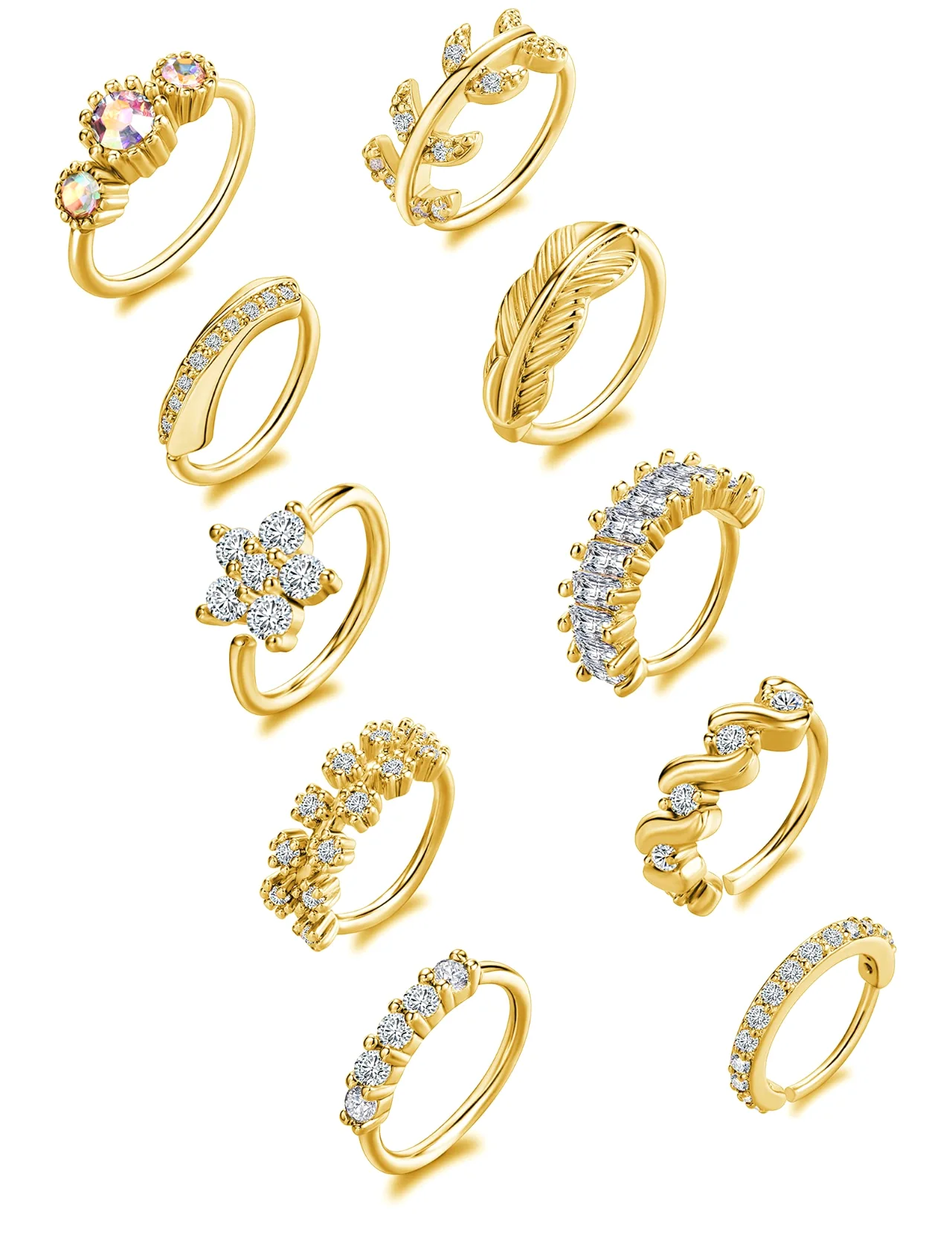
Only in a healed nostril
Everything here is for a nostril that has healed. A new nose piercing keeps the jewelry your piercer chose until they say it can change, and the Association of Professional Piercers keeps plated jewelry out of a fresh piercing. If a healed piercing turns sore, red or swollen, the American Academy of Dermatology's advice is to have it looked at rather than to keep changing studs.